I. What is a Bearing Cage?
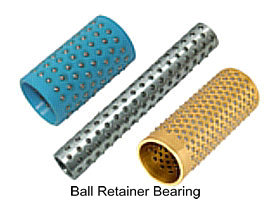
A bearing cage (also known as a separator or retainer) is a crucial component within a rolling-element bearing. It is a set of precisely designed separators whose core function is to keep the rolling elements (balls, rollers, etc.) apart from each other and hold them in place at uniform intervals within the bearing.
Think of it as the “skeleton” or “track” of the bearing. It guides and supports the rolling elements, ensuring they work in an orderly manner without colliding or clustering together.
A bearing cage (also known as a separator or retainer) is a crucial component within a rolling-element bearing
It is a set of precisely designed separators whose core function is to keep the rolling elements(balls, rollers,etc) apart from each other and hold them in place at uniform intervals within the bearing
II. Primary Functions of the Cage
Separate Rolling Elements: Prevents direct contact, collision, and friction between rolling elements during operation, thereby reducing wear, heat generation, and noise.
Guide Rolling Elements: Ensures they roll smoothly on the correct raceway, especially in unloaded or lightly loaded zones, preventing sliding or skewing.
Maintain Uniform Spacing: Guarantees even distribution of load and lubricant within the bearing, improving operational stability and service life.
Retain/Guide Lubricant: Some cage designs (e.g., those with pockets or windows) help retain lubricant around the rolling elements.
Provide Pocket Clearance: In certain applications (like high-temperature environments), allows appropriate clearance between the rolling elements and the cage to accommodate thermal expansion.
III. Advantages of Using a Cage
Reduces Friction & Wear: Eliminates direct contact between rolling elements, significantly lowering internal friction and wear.
Lowers Noise & Vibration: Results in smoother, quieter bearing operation, critical for precision machine tools, household appliances, and automotive applications.
Enables Higher Speeds: Effective guidance and reduced friction allow bearings to operate at higher rotational speeds.
Extends Bearing Life: Uniform load distribution and minimized friction directly translate to longer bearing service life.
Improves Lubrication Effectiveness: Aids in efficient circulation and distribution of lubricant among the rolling elements.
Prevents Element Dropout: Holds rolling elements together during bearing mounting or dismounting (especially for separable bearing types), facilitating handling.
IV. Cage Materials
Material selection depends on the bearing’s application environment, speed, temperature, and load.
Pressed Steel Cages:
Advantages: Lightweight, low cost, good toughness, can retain small amounts of grease.
Applications: Most common, suitable for most standard ball and roller bearings.
Brass/Bronze Cages:
Advantages: High strength, excellent wear resistance, good self-lubricating properties, heat-resistant, fatigue-resistant.
Applications: High-speed, high-load, high-temperature, or situations requiring good lubricity (e.g., machine tool spindles, heavy machinery). Often machined from solid material.
Polymer/Plastic Cages:
Common Materials: Nylon (PA66), Polyether Ether Ketone (PEEK), Polytetrafluoroethylene (PTFE).
Advantages: Extremely lightweight, excellent self-lubrication, effective damping and noise reduction, corrosion-resistant.
Applications: High-speed applications (e.g., electric spindles), food/medical equipment (for lubrication-free operation), chemically corrosive environments, quiet operation requirements (e.g., household appliances). Temperature limits and chemical compatibility must be considered.
Other Materials: For extremely special environments, stainless steel (corrosion-resistant), special alloys, or composite materials may be used.
V. Application Areas
The cage is an indispensable part of all rolling-element bearings, used across all industrial sectors and daily life:
Automotive Industry: Wheel hub bearings, transmissions, generators, water pumps, clutches.
Electric Motors & Appliances: EV/industrial motors, air conditioner compressors, washing machines, vacuum cleaners.
Precision Machine Tools: Spindles, lead screws, rotary tables.
Aerospace: Engine accessories, landing gear, control systems.
Wind Power: Main bearings, generator bearings, yaw and pitch bearings.
Medical Equipment: Dental drills, CT scanners, centrifuges.
Railway Transportation: Traction motors, axle bearings.
VI. Common Types (by Structure)
Ribbon Cage (Snap-Type Cage): Common in deep groove ball bearings, assembled by riveting.
Wave Cage (Pressed Crown Cage): The most common pressed steel cage, with a wave-like form.
Window-Type Cage: A one-piece ring with pockets that “lock” the rolling elements in place.
Machined Window Cage: Often made from machined brass or polymer, high strength.
Pressed Window Cage: Formed from pressed steel plate.
Pin-Type Cage: Consists of two side rings connected by pins passing through the center of the rollers, commonly used in large cylindrical roller bearings.
Conclusion
Though small, the bearing cage is the “unsung hero” behind the efficient, reliable, and quiet operation of a bearing. Its design, material, and manufacturing quality directly impact the overall bearing performance and lifespan. When selecting a bearing, choosing the appropriate cage type based on specific speed, load, temperature, lubrication conditions, and environment is a key step in ensuring optimal equipment performance.
please send details inquiry to Susan Shi, email: susan@slide-bearing.com